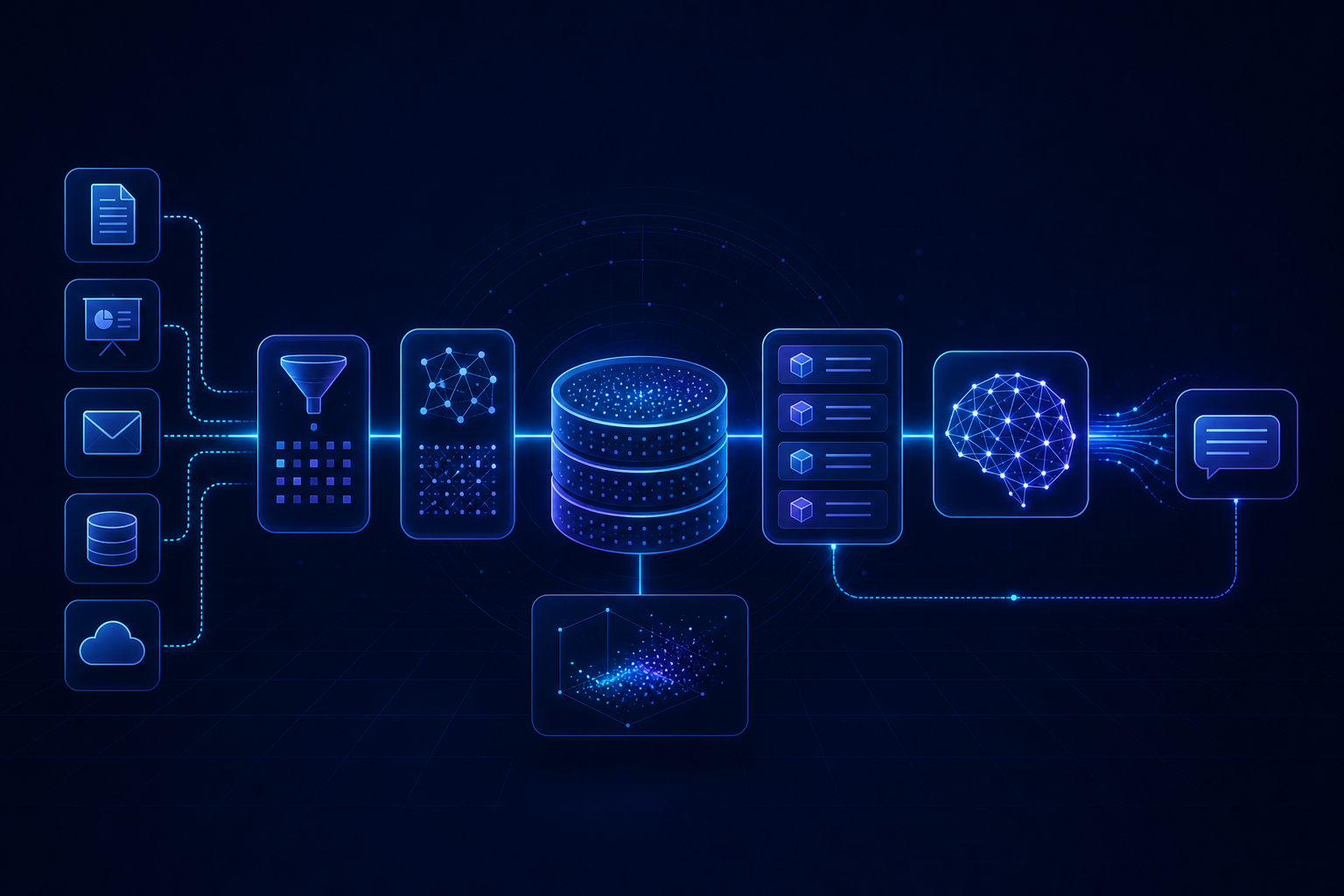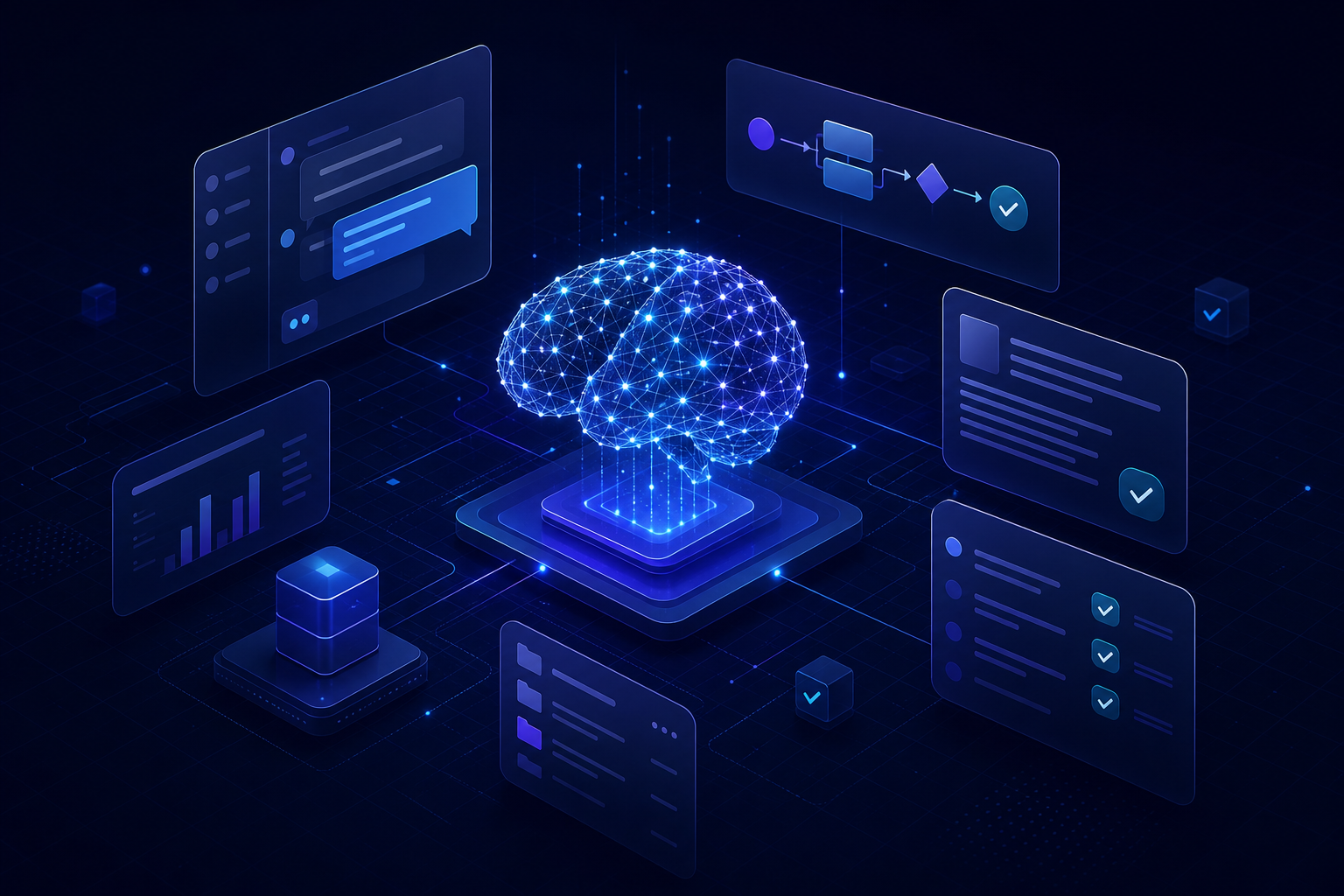
The first generation of AI copilots was a chat box bolted to a sidebar. The second generation lives inside your workflows. The third — which is the one enterprises actually need — is part of the operating system itself.
What makes a copilot enterprise-grade
- 1It can read what the user can read — and absolutely nothing else.
- 2It can take actions — bounded by policy, logged, reversible.
- 3It explains its reasoning when asked.
- 4It learns from corrections and improves measurably.
- 5It fails gracefully and visibly when it doesn’t know.
Memory, but bounded
Enterprise copilots need memory — but memory is not a free buffet. We design it as a structured profile per user and per workspace: capabilities, preferences, and short-term context, all inspectable and editable.
Action approval is the new ‘edit access’
If a copilot can take meaningful actions, it needs an approval surface. We design copilots with three modes — observe, suggest, and act — and we let admins move teams between modes as confidence grows.
An AI copilot in enterprise is never an autonomous agent in disguise. It is a tool with hands, used by a human with intent.