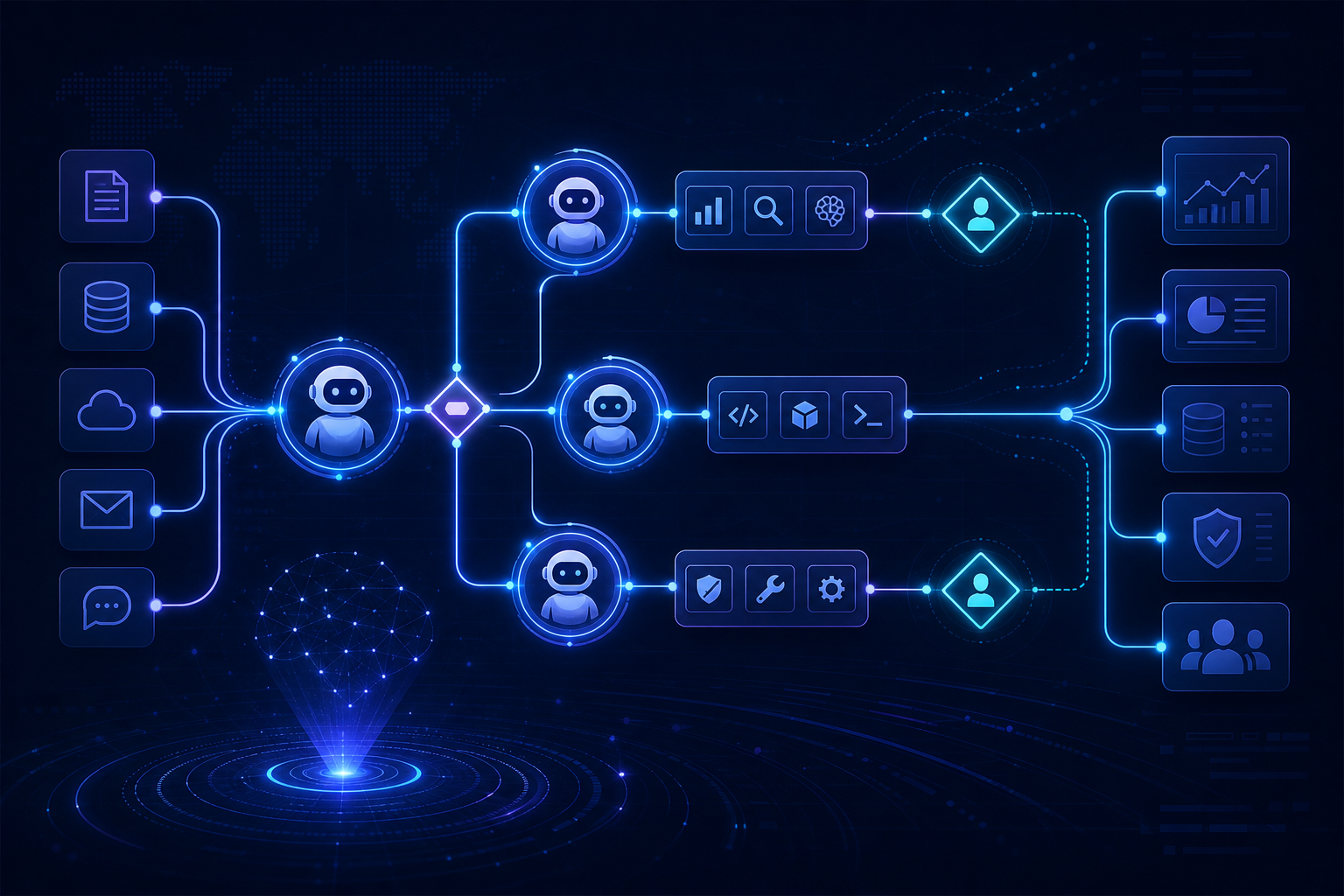
Every SaaS roadmap in 2026 has an 'agents' line item. Most will ship chatbots with extra steps. The teams that win treat agents as orchestration systems — bounded tools, explicit permissions, evals, and human approval on anything that moves money or customer data.
Agent vs chatbot: the difference buyers feel
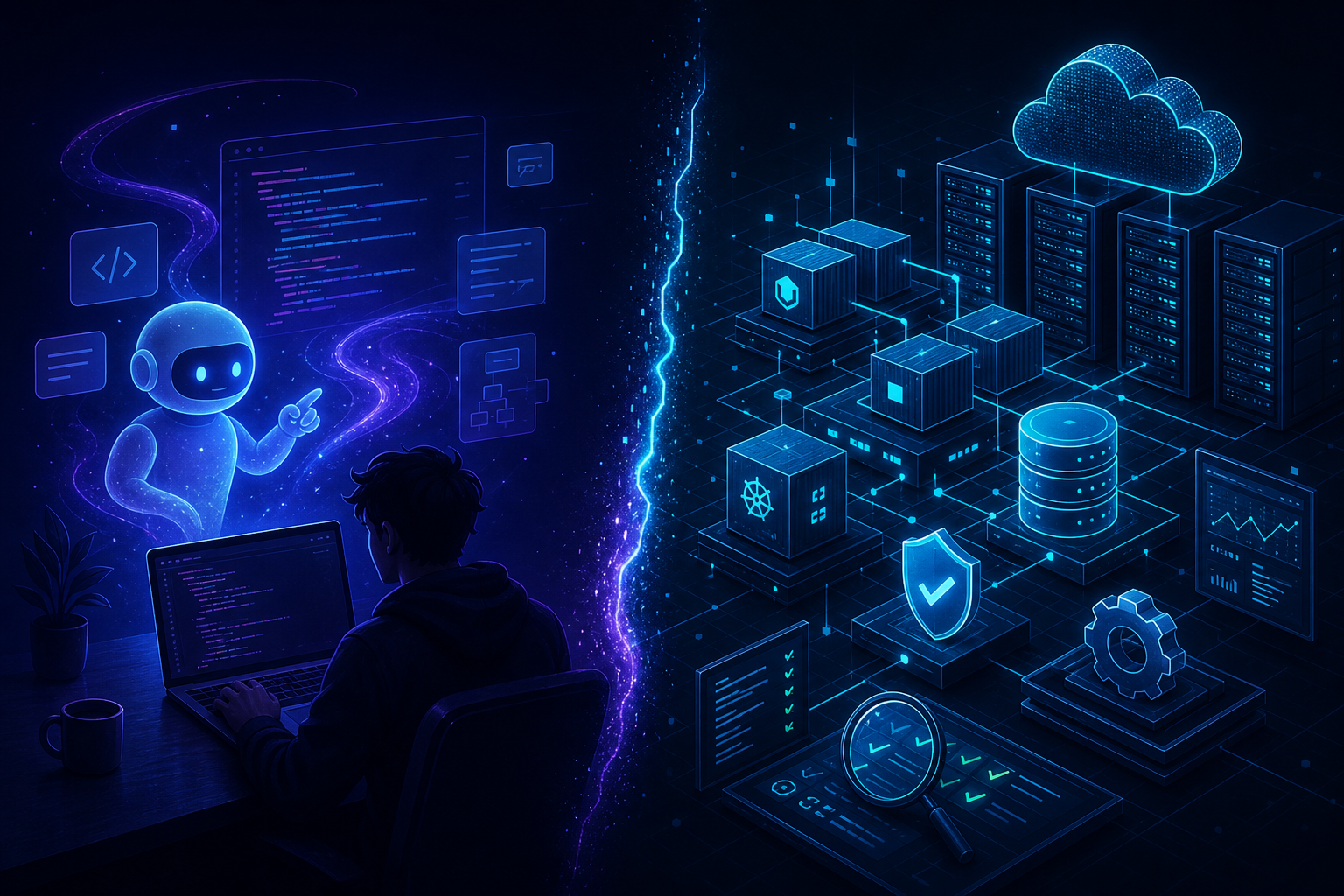
A chatbot answers questions. An agent takes actions — creates tickets, updates CRM records, drafts invoices, triggers workflows. That distinction is exactly why enterprise procurement asks harder security questions about agents than about copilots.
Production patterns that work
- 1Tool registry — each action is a typed API with idempotency keys.
- 2Policy layer — role-based limits on which tools an agent may invoke.
- 3Human-in-the-loop — approvals for refunds, contract changes, bulk updates.
- 4Tracing — every plan, tool call, and result logged for audit and debugging.
- 5Eval suites — regression tests for agent plans, not just final text output.
What to avoid
- Open-ended 'do anything' prompts without tool boundaries.
- Agents with direct database write access and no transaction rollback.
- Shipping without cost caps — runaway token spend kills unit economics.
- Marketing autonomy before engineering has observability.
2026 reality check
The best enterprise agents feel boring — predictable, auditable, and slightly less autonomous than the demo. That is why customers trust them.