

Digital Systems for Modern Manufacturing
Connect production workflows, inventory, materials, traceability, and operational data through technology built around how your manufacturing business operates.



Connect production workflows, inventory, materials, traceability, and operational data through technology built around how your manufacturing business operates.
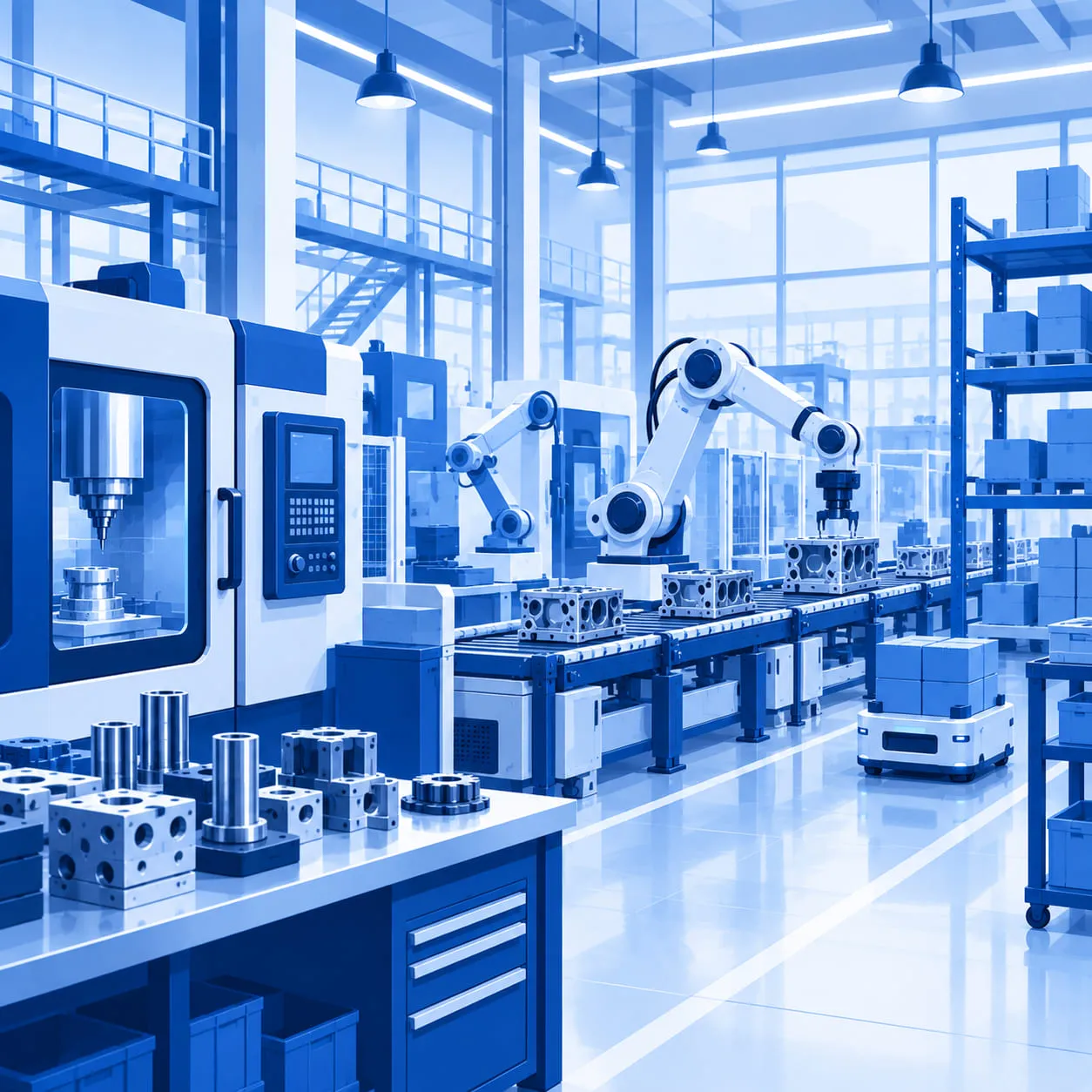
Manufacturing depends on connected production, materials, inventory, quality, and operational data. When these processes operate across disconnected systems, visibility and coordination become harder.
Connect planning, production, work orders, and operational processes.
Track raw materials, components, work-in-progress, and finished goods.
Bring production activity, inventory, and business data into connected systems.
Automate repetitive workflows and reduce dependence on disconnected spreadsheets and manual coordination.
Bring production, materials, inventory, traceability, and operational workflows together in a connected digital environment.
Digitize shop-floor routing, machine scheduling, and work order tracking across multi-stage assembly lines. We connect production planners, supervisors, and floor operators in real time, eliminating paper job travelers and providing instantaneous visibility into WIP status and bottleneck delays.
Gain absolute stock precision across raw materials, components, in-process sub-assemblies, and finished goods. We manage dynamic multi-level bills of materials (BOM), automate reorder trigger thresholds, track batch yields, and eliminate unrecorded stock shrinkage across warehouses.
Establish complete backward and forward lot-to-serial genealogy across every manufacturing stage. We capture real-time stage inspection logs, machine calibration metrics, non-conformance quarantine flags, and generate instant audit-ready reports for ISO 9001 and IATF 16949 compliance.
Bridge the operational divide between plant floor OT systems and enterprise IT architectures. We capture millisecond-level machine telemetry, automate Overall Equipment Effectiveness (OEE) calculations, track uptime trends, and empower plant directors with live predictive operational insights.
Move from disconnected processes to connected manufacturing operations through a structured implementation approach.
Map production, materials, inventory, teams, and existing systems.
Bring production data, inventory, workflows, and business systems together.
Implement production, material, inventory, traceability, and operational workflows.
Extend automation, integrations, analytics, and digital operations as requirements evolve.
Connected manufacturing technology can help teams gain greater control and visibility across day-to-day operations.
Bring production, inventory, and business workflows together.
Give teams clearer visibility into production activity and operational status.
Create structured records across materials, batches, and production stages.
Reduce repetitive manual work through connected workflows and automation.
Whether you're digitizing existing processes or building new operational systems, we can engineer technology around the way your manufacturing business works.